Sleep Hygiene
 Sleep & Science
Light Before Bed Is Keeping You Awake — Here's What to Do About It
By Sarah Jenkins • October 24, 2023
The Biology of Light and Sleep
Your body runs on a circadian rhythm, a roughly 24-hour internal clock that regulates sleep-wake cycles. For millennia, this rhythm has been dictated by the sun. When the sun goes down, darkness triggers the pineal gland to release melatonin—the hormone that signals your body it is time to rest.
Enter modern life. Artificial light, especially the blue light emitted by screens, mimics daylight. When you look at your phone or tablet, your brain receives a confusing signal: "It is daytime; stay alert." This suppresses melatonin production by up to 50%, delaying sleep onset and reducing the quality of your rest.
"The light you see at night is the strongest trigger your body has to think it is still afternoon."
The goal isn't to eliminate light entirely (we need it to see), but to shift the spectrum and intensity of the light you consume in the hours leading up to bed.
The Evening Audit
A Room-by-Room Guide
Most of our light exposure happens in the last two hours before bed. Here is how to audit your environment for potential sleep disruptors.
The Bedroom
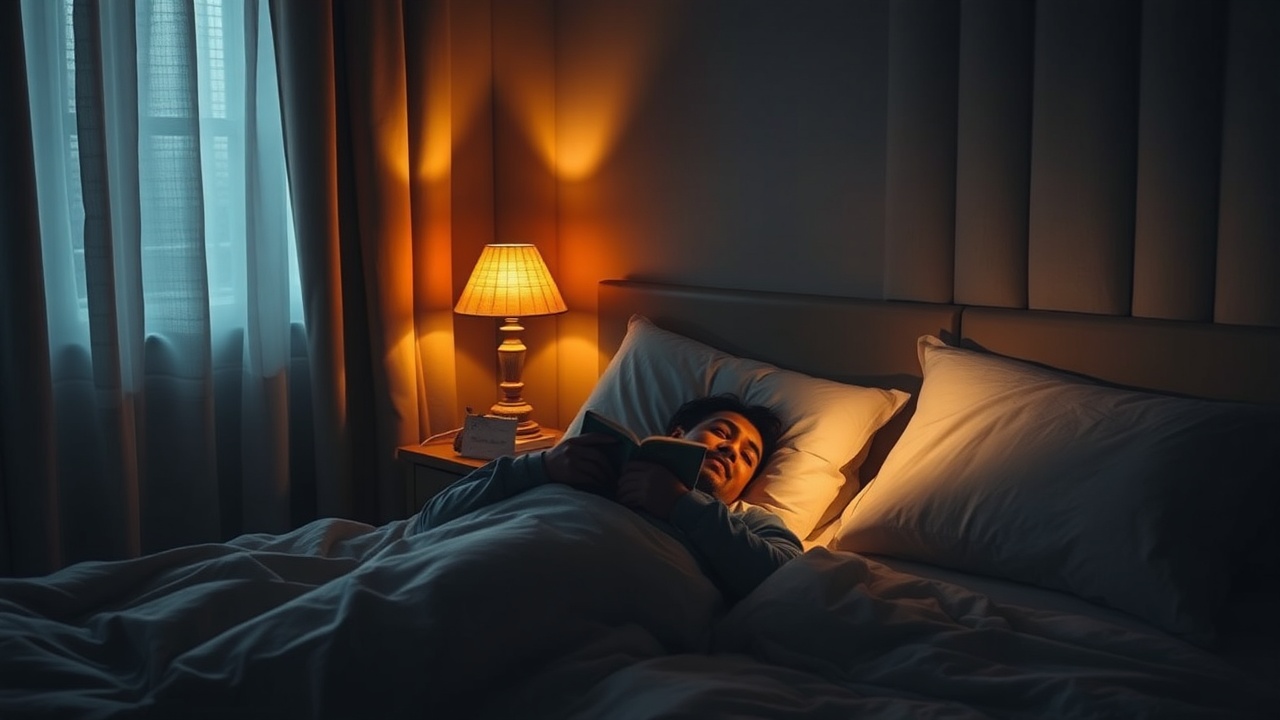
Overhead ceiling lights are the worst offenders. They cast a harsh, white glow that hits the entire room. Replace these with a single, warm table lamp or a floor lamp with a warm bulb. Ensure your alarm clock is turned away from you or covered.
The Bathroom
Bathroom lights are often the brightest in the house. Use a dimmer switch if possible, or rely on nightlights that emit red or amber light. Red light has the least impact on melatonin production.
The Living Room
If you are reading or winding down, avoid cool-white daylight bulbs (5000K). Switch to "soft white" or "warm white" bulbs (2700K to 3000K) which are easier on the eyes and signal relaxation.
The Kitchen
Avoid the bright overheads when grabbing a late-night snack. Use the under-cabinet lighting or a small table lamp. A dark kitchen helps signal that it is time to stop eating and start sleeping.
Product-Neutral Adjustments
You don't need to buy expensive gadgets to fix this. Small changes to your environment and habits can have a profound effect.
1. Adjust Your Bulbs
Look at the packaging of your lightbulbs. You are looking for the Kelvin (K) temperature. Anything above 4000K is too bright for the evening. Aim for 2700K or 3000K. This is often labeled as "Soft White" or "Warm Light."
2. Filter Your Screens
If you must use a device, change the display settings. Enable "Night Shift" (iOS) or "Night Light" (Windows). These features shift the color temperature of your screen to orange and red, reducing blue light emission significantly.
3. Physical Barriers
Blackout curtains are one of the most effective sleep aids available. If you don't have them, hang a thick, dark curtain over the window or use a sleep mask. Consistent darkness is the strongest signal for melatonin release.
Reading a paper book under warm light is one of the most sleep-friendly evening activities.
Action Plan
Your Evening Lighting Checklist
Switch to Warm Bulbs
Replace all cool-white bulbs in your living room and bedroom with 2700K warm bulbs by 7:00 PM.
Dim the Screens
Enable Night Shift mode on your phone and computer 60 minutes before you plan to sleep.
Cover the Clock
Ensure your alarm clock display faces away from you or is covered with a cloth to prevent blue-light exposure while falling asleep.
Use Red Nightlights
Place a red or amber nightlight in the bathroom hallway to navigate the house without waking your brain.
More on Sleep
About the Author
Sarah Jenkins
Senior Wellness Editor
Sarah has been researching circadian rhythms for over a decade. She believes that small, consistent changes in our environment are the most powerful way to improve our mental health.